
ENDOMETRIOSIS
DIAGNOSIS & TREATMENT

OUR APPROACH
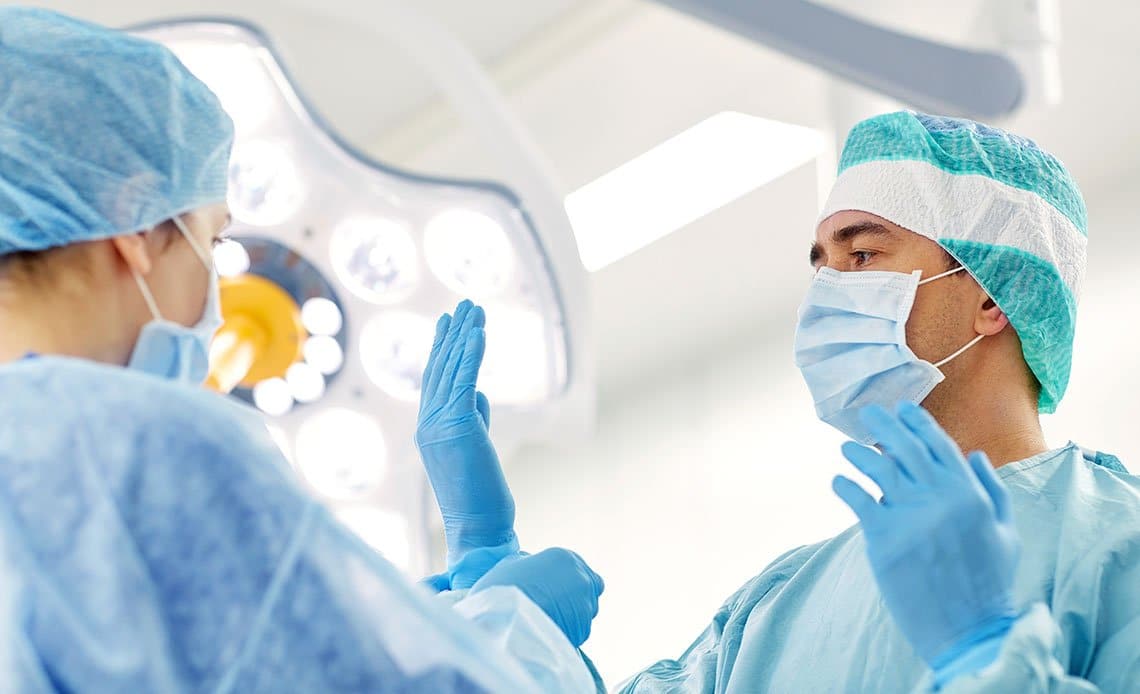
We are dedicated to providing you with a comprehensive diagnosis for the cause of your pelvic pain and engaging in a thorough discussion of available therapeutic options. Our goal is to address your endometriosis with utmost precision by meticulously removing all affected tissue.
In 98-99% of cases, we are able to perform this procedure using a minimally invasive technique known as a laparoscopic excision of endometriosis. This approach not only ensures a speedy recovery, but also minimizes scarring and offers long-term relief from symptoms. By carefully excising the areas of affected tissue, we strive to eliminate the root cause of your pain.
In situations where your endometriosis affects your bowel or bladder, we have a highly skilled multidisciplinary team equipped to handle even the most severe cases involving these areas. Rest assured that we possess the necessary expertise to address complex instances of endometriosis within our team.
Following your surgery, we are committed to your continued well-being. We will provide outpatient follow-up care for a minimum of twelve months, closely monitoring your recovery to ensure its completeness. We understand the importance of ongoing support during your healing journey.
Moreover, we recognize the impact of endometriosis on fertility. If necessary, we work closely with IVF specialists, collaborating to enhance fertility and achieve successful pregnancies. Our comprehensive approach aims to assist you in realizing your dreams of starting or expanding your family, employing both natural conception and assisted reproductive techniques when appropriate.
Your well-being and satisfaction are our top priorities. With our expertise, advanced techniques, and holistic care, we are dedicated to providing you with the highest standard of treatment for endometriosis, addressing your unique needs with compassion and expertise.
ENDOMETRIOSIS DIAGNOSIS
At The Endometriosis Clinic, we possess the expertise and knowledge necessary to assist you, and our primary goal is to confirm your diagnosis in an efficient and timely manner.
To achieve this, we employ a combination of diagnostic methods tailored to each individual case, ensuring comprehensive assessment and accurate results.
Our process begins with a meticulous history-taking and thorough examination, during which we invest ample time to understand your unique medical background and the symptoms you have experienced in the past. By gathering this essential information, we aim to establish a comprehensive understanding of your condition.
In most cases, an ultrasound scan will be requested as it proves particularly useful insight into the extent of with endometriosis. This non-invasive imaging technique helps us identify and evaluate the presence of cysts, contributing to a more accurate diagnosis. If your scan does not highlight endometriosis this does not mean you do not have it necessarily as in some cases (especially superficial endometriosis) it may not be seen on the ultrasound.
Furthermore, we may utilise MRI scans, which provide detailed images that aid in characterizing ovarian cysts and assessing the severity of disease in cases involving rectovaginal disease. These scans provide valuable insights that support accurate diagnosis and enable us to tailor the most appropriate treatment plan for you.
When deemed necessary, we may recommend a laparoscopy, a minimally invasive surgical procedure. This involves inserting a camera through a small incision in the navel (belly button), allowing for a direct visualization of the pelvic organs. This technique is highly effective in diagnosing endometriosis and is widely regarded as the “Gold Standard” for diagnosis due to its accuracy and reliability.
With our comprehensive range of diagnostic tools and techniques, we strive to provide you with a prompt and precise diagnosis.
Our team at The Endometriosis Clinic is dedicated to guiding you through the diagnostic process, ensuring you receive the appropriate care and support you need on your journey to wellness.


ENDOMETRIOSIS TREATMENT
At The Endometriosis Clinic we provide an integrated approach to the treatment of women with endometriosis with a multi-disciplinary team made up of highly experienced specialists.
Endometriosis can divided into four stages: stage (severe) to stage 4 (most severe). The aim of treating is to alleviate the symptoms caused by endometriosis and to improve quality of life. In some cases, surgery can also be helpful with fertility which is often affected by the disease.
We take am individualised to treatment and ensure your wishes are central to any treatment plans. We will discuss medical options for management as well as surgical and counsel you on the risks involved with each option.
For cases where a woman is suffering significant pain or has fertility problems, we will discuss the option of meticulous removal of the disease through laparoscopic excision carried out by highly experienced, specialist surgeons.
TREATMENT OPTIONS FOR ENDOMETRIOSIS
Painkillers
Pain is the most common symptom for many women with endometriosis. If the pain is relatively mild, regular painkillers during your period may be enough. Pain killers vary simple analgesic (such as aspirin and paracetamol), through compound analgesics (which combination of drugs often including aspirin or paracetamol and a mild narcotic such as codeine) through to non-steroidal anti-inflammatory drugs (such as Neurofen, Ponstan and Voltarol) and narcotic analgestics (similar to morphine or Tramadol).
Hormone Therapy
Hormone therapy can help to reduce the stimulation of endometriosis by preventing the body from making the female sex hormones (oestrogen) that stimulates it. However, it is important to note that hormones do not remove the tissue, they only suppress it, leading to a return of symptoms as soon as the hormone therapy is stopped.
In addition, patients can sometimes experience unpleasant side effects from these medications such as a ‘medical menopause’ brought on artificially by hormone therapy.
Surgical Therapy
Having significant experience managing endometriosis, we recognise that a very effective treatment for the disease is surgical excision. This applies to moderate, mild and severe endometriosis and is a thorough way of improving symptoms and possibly fertility.
Surgery can also reduce the need for patients to have to take drugs which can cause side effects. The technique of surgical excision involves removal of the lesions of endometriosis and, in the majority of cases (98 – 99%), this is performed laparoscopically, even if it involves removal of endometriosis on the bladder or bowel.
We remove the endometriosis using very fine scissors or a Harmonic scalpel (ultrasonic device) that are placed into the abdomen through very small incisions (around 1cm in size) and we aim to remove all of the disease in order to eradicate symptoms of pain, increase fertility and reduce the likelihood of disease ever returning.
Diaphragmatic and Thoracic Endometiosis
At The Endometriosis Clinic we also have the skills of two very experienced surgeons who are able to help those patients with diaphragmatic and thoracic endometriosis – Mr Rob Sutcliffe and Mr Maninder Kalkat, who both have a specialist interest in the management of patients with endometriosis affecting the diaphragm and thorax ( lungs and ribcage). They are able to work with our pelvic surgeons with the aim of excising the disease from these areas of the body.
